
Key Takeaways
- Choosing the right machine guards protects workers from hazards and improves overall operational safety.
- Machine Guards Manufacturers in India offer tailored solutions for specific equipment and workplace environments.
- Understanding different types of machine guards helps ensure effective protection for various machinery.
- Regular risk assessments are crucial in determining the appropriate type of machine guard for your equipment.
- Effective machine guarding reduces workplace risks and fosters a safety-focused culture in industrial settings.
Sanocs is a Leading Provider of Machine Guarding Solutions for Industrial Equipment and Workplace Safety.
Industrial equipment plays a vital role in modern manufacturing, but every machine with moving parts introduces potential risks. Rotating shafts, belts, gears, cutting tools, conveyors, and automated systems can create hazardous situations if proper safeguards are not installed. Choosing the right machine guards is one of the most important decisions any factory can make to protect employees, improve workplace safety, and support uninterrupted operations.
A well-designed machine guarding system is not simply a safety accessory. It is a critical component that helps separate workers from hazardous machine movements while allowing equipment to operate efficiently. Occupational safety authorities consistently state that machine guarding is essential because moving machine parts can cause serious injuries such as cuts, crushing injuries, and amputations if hazards are not properly controlled.
Why Machine Guards Are Essential
Every industrial facility contains machinery designed to improve productivity. However, machines often include exposed moving components that can create safety hazards when operators work nearby.
Machine guards help by:
- Restricting access to hazardous areas
- Protecting workers from moving machine parts
- Reducing workplace risks
- Supporting safer maintenance activities
- Improving overall operational safety
Safety standards emphasize that any machine part, function, or process capable of causing injury should be safeguarded appropriately. Barrier guards, interlocks, light curtains, and protective enclosures are commonly used methods.
This is why businesses frequently work with experienced Machine Guards Manufacturers in India when developing machine safety solutions.
Understanding Different Types of Machine Guards
Choosing the right guard starts with understanding the type of equipment being protected.
Fixed Machine Guards
Fixed guards are permanently attached protective barriers designed to prevent access to hazardous machine areas during operation. These guards are widely used because they provide continuous protection and are difficult to bypass when properly installed. OSHA guidance notes that safeguards should be secure and firmly attached to machinery whenever possible.
Interlocked Guards
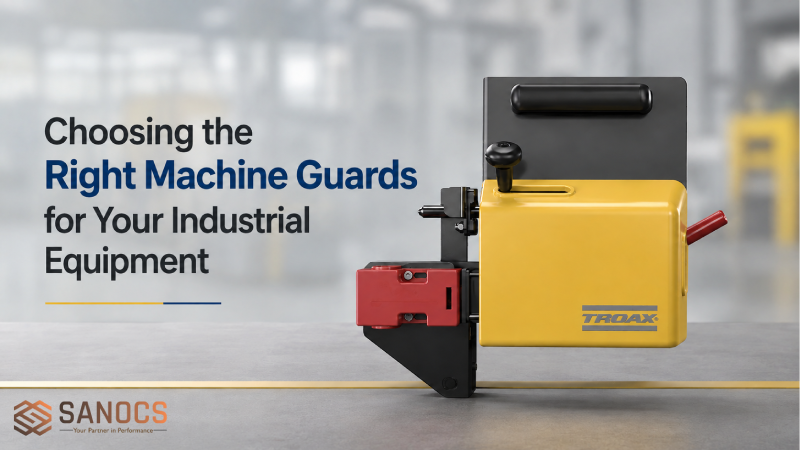
Interlocked guards are connected to machine controls. If the guard is opened or removed, the machine automatically stops operating.
These systems are commonly used on:
- Robotic cells
- Automated production lines
- Packaging equipment
- CNC machinery
Interlocked guarding helps reduce exposure to hazardous machine movement during operation and maintenance activities.
Adjustable Guards
Adjustable guards allow operators to reposition the guard based on the material or task being performed. They are often used on machines where workpiece sizes vary.
Perimeter Safety Fencing
Large automated systems frequently require perimeter guarding solutions. Safety fencing creates a protected boundary around machinery while maintaining visibility and controlled access.
Many facilities rely on Machine Guards Manufacturers in India to design fencing systems tailored to specific operational requirements.
Factors to Consider When Choosing Machine Guards
Not every machine requires the same safeguarding solution. Selecting the right guard involves evaluating the equipment, operator interaction, and workplace environment.
1. Type of Hazard
The first step is identifying potential hazards.
Common machine hazards include:
- Rotating components
- Cutting tools
- Pinch points
- Flying particles
- Automated movement
OSHA identifies rotating parts, ingoing nip points, sparks, chips, and other mechanical hazards as key risks that require safeguarding measures.
2. Frequency of Access
Machines requiring regular maintenance or operator interaction may benefit from interlocked guards or controlled access systems.
Safety professionals often recommend assessing how workers interact with machinery before selecting guarding methods. Community discussions among machine safety experts emphasize that risk assessment should drive guarding decisions rather than applying a single solution to all machines.
3. Visibility Requirements
Operators often need clear visibility during machine operation. Modern guarding systems can provide protection while maintaining visibility into production processes.
4. Maintenance Requirements
Machine guards should allow maintenance personnel to safely service equipment without creating unnecessary operational challenges.
Lockout/Tagout procedures and proper guard design are important considerations during equipment maintenance activities. OSHA guidance highlights the importance of isolating machinery and restoring guards before returning equipment to service.
5. Compliance and Safety Standards
Industrial facilities should select machine guards that align with recognized safety requirements and machine-specific risk assessments.
Machine guarding standards exist across various industrial sectors and are designed to address different machinery types and operational risks.
Common Applications of Machine Guards
There are several instances where machine guards are employed in industries and these include:
- Manufacturing Plants: Production machines may require machine guards as protection measures that minimize worker exposure to danger zones.
- Warehouses and Distribution Centers: Conveyor systems and automation machinery in such centers may be equipped with machine guards.
- Packaging Plants: Packaging machines are often fitted with interlocked machine guards and access controls.
- Robotics and Automation: Perimeter fencing and access control measures are needed to keep humans away from robotics.
Such instances explain the reason why most companies opt for machine guard manufacturers in India.
Benefits of Choosing the Right Machine Guard
The right safeguarding solution offers several advantages:
- Improved employee protection
- Reduced workplace risks
- Better operational reliability
- Protection for machinery and equipment
- Support for safety-focused workplace culture
Effective safeguarding is still one of the most crucial ways to prevent injuries caused by machinery, according to safety experts.
Why Choose Us
Our company Sanocs is dedicated to ensuring industries provide safer and more efficient workplaces by implementing high-end machine guarding solutions. The reason for us being so dedicated to our mission is that each workplace differs from the other in terms of their operations. At Sanocs, we offer machine safety systems that are application-specific in nature. In consultation with our customers, we ensure that we assess their work environment in order to provide them with effective safeguarding solutions. Being a leading machine guards’ manufacturer in India, Sanocs focuses on quality and durability.
Conclusion
Selecting the appropriate machine guards is an important process when trying to build a safer environment in the industry. There are many types of machine guards such as fixed guards, interlocked guards, perimeter fence guards, and other safety solutions, and each one is used for its particular function. Good machine guarding will help avoid unnecessary risks, ensure worker safety, and guarantee smooth operations at the place of work. Cooperation with professional Machine Guards Manufacturers in India will allow installing appropriate safety systems in the plant according to individual needs.
Looking for reliable machine guarding solutions from trusted Machine Guards Manufacturers in India? Contact Sanocs today at +91 9879242755 or email inquiry@sanocs.in to discuss the right machine safety system for your industrial equipment and facility.
Frequently Asked Questions
What are the different types of machine guards available?
There are several types of machine guards, including fixed guards, interlocked guards, adjustable guards, and perimeter safety fencing. Each type serves a specific purpose based on the machinery being protected and the operational environment.
Why should I work with machine guards manufacturers in India?
Working with professional machine guards manufacturers in India ensures that you receive tailored solutions that meet local safety standards and industry requirements. They have the expertise to assess your facility’s needs and provide effective safeguarding systems.
How do I choose the right machine guard for my equipment?
Choosing the right machine guard involves assessing the type of hazards present, the frequency of access to the machine, visibility requirements, maintenance needs, and relevant safety compliance standards. It’s essential to evaluate these factors to select a guarding solution that offers adequate protection.
What are the key benefits of using machine guards?
The key benefits of using machine guards include improved employee protection, reduced risk of workplace injuries, enhanced operational reliability, and better machinery protection. This contributes to a safety-focused workplace culture that prioritizes both employee well-being and continuous operation.
How can machine guards improve workplace safety?
Machine guards help improve workplace safety by restricting access to hazardous areas, protecting workers from moving parts, and supporting safer maintenance activities. Properly designed guards reduce the likelihood of accidents and injuries in industrial environments.