
Key Takeaways
- Barrier protection systems create clear boundaries, enhancing safety between moving vehicles and pedestrians in workplaces.
- Implementing barrier protection helps reduce workplace risks, including collisions and equipment damage.
- Dedicated traffic routes supported by barriers improve workflow efficiency in busy industrial environments.
- Properly selected barrier protection is crucial for meeting safety guidelines and operational needs of various facilities.
- Barrier protection systems enhance workplace safety by clearly separating pedestrian and vehicle traffic.
Sanocs is a Leading Provider of Barrier Protection Solutions for Industrial Safety and Traffic Management.
A busy workplace is a sign of productivity, but it can also introduce safety challenges. In factories, warehouses, logistics centers, and manufacturing facilities, employees, forklifts, machinery, and vehicles often operate in the same environment. Without proper safety measures, the risk of collisions, injuries, and equipment damage increases significantly.
This is where Barrier protection systems make a difference. They create clear boundaries, separate people from moving equipment, and support organized traffic flow throughout a facility. Because safety is becoming a crucial component of operational effectiveness and business continuity rather than only a compliance requirement, modern businesses are spending more in barrier systems.
Understanding Barrier Protection Systems
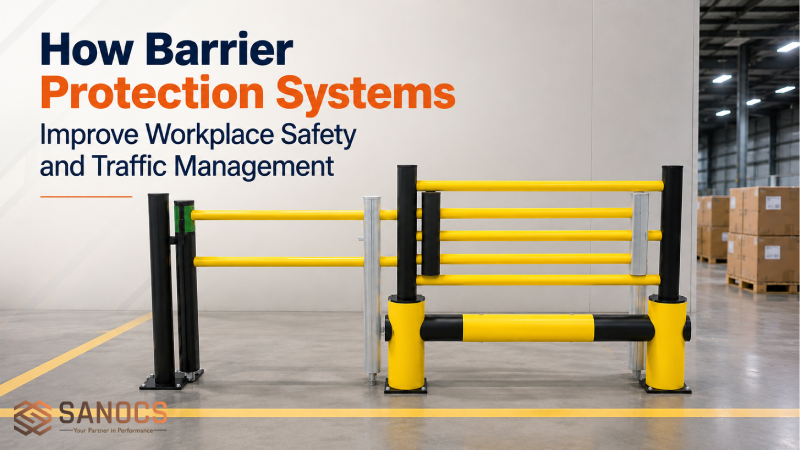
Barrier systems are physical safety structures designed to separate, guide, and protect people, equipment, and infrastructure within industrial and commercial environments. Their primary purpose is to reduce the risks associated with vehicle movement, pedestrian traffic, and operational hazards.
Industry safety guidelines recommend separating pedestrian and vehicle routes through barriers, rails, and signage to reduce workplace transport risks and improve traffic management.
Whether installed around walkways, loading docks, machinery, storage racks, or traffic routes, Barrier protection systems help create a safer and more organized workplace.
Why Workplace Safety Requires Barrier Protection
Industrial facilities often involve constant movement of forklifts, pallet trucks, and heavy machinery. When workers and vehicles share the same space, accidents can occur if traffic routes are not properly controlled.
Physical safety barriers are widely recommended to separate people from powered mobile equipment and reduce workplace risks.
Some key workplace risks that barriers help address include:
- Vehicle and pedestrian collisions
- Damage to machinery and equipment
- Warehouse rack impacts
- Restricted-area access
- Traffic congestion inside facilities
- Accidental entry into hazardous zones
By installing effective Barrier protection systems, organizations can create safer working environments while improving operational flow.
How Barrier Protection Improves Traffic Management
- Creates Dedicated Traffic Routes: One of the most important functions of barriers is separating vehicle traffic from pedestrian pathways. Employes can navigate the workplace safely and with less uncertainty thanks to designated paths. Workplace traffic management standards emphasize separate pedestrian and vehicle routes as one of the most effective safety measures available.
- Protects Employees in High-Traffic Areas: Warehouses and production facilities often experience heavy forklift activity. Safety barriers provide physical separation that helps reduce the likelihood of contact between workers and moving vehicles.
- Supports Better Workflow: Clear traffic routes contribute to smoother operations. When movement pathways are well-defined, facilities can reduce bottlenecks and improve overall efficiency.
- Reduces Damage to Infrastructure: Barriers are frequently installed around columns, machinery, workstations, storage racks, and loading docks to minimize accidental impact damage. Warehouse barrier systems are commonly used to protect critical assets and support operational continuity.
Applications of Barrier Protection Systems
- Warehouses and Distribution Centers: Industrial units may have pedestrians, forklifts, and material handling systems in their premises. Barrier systems assist in segregating different processes and safeguarding the infrastructural elements from any unintended collisions.
- Manufacturing Units: Barrier systems are used extensively within manufacturing units for better and safe performance of the process.
- Logistics Units: In logistics units, efficient movement of vehicles is essential. Barriers facilitate traffic management and enhance operational efficiency.
- Loading Bays: Loading bays are among the most active parts in an industrial unit. Barriers serve to increase safety measures in such places.
- Areas of Machines: Many industrial units use barrier systems around machines and hazardous areas.
Key Benefits of Barrier Protection
- Enhanced Employee Safety: Physical separation between pedestrians and vehicles helps reduce workplace risks and supports a safer environment.
- Improved Traffic Control: Clearly marked and protected traffic routes help facilities maintain organized movement patterns.
- Asset Protection: Barriers help protect valuable equipment, storage systems, and infrastructure from accidental impacts.
- Better Compliance with Safety Practices: Many workplace safety guidelines recommend physical separation of pedestrians and vehicle traffic wherever practical.
- Long-Term Operational Efficiency: A safer workplace often experiences fewer disruptions, less equipment damage, and smoother day-to-day operations.
Choosing the Right Barrier Protection System
There are different workplace environments with different safety needs. The selection of the proper barrier will be made according to:
- Types of traffic of vehicles
- Patterns of pedestrian traffic
- Lay-out of the facility
- Requirements for impact protection
- Functional needs
It is advised to select barriers in accordance with the particular threats and needs of the facility as opposed to having an all-inclusive solution.
It is for this reason that companies work with professional providers who have an understanding of industrial safety needs and advise on Barrier protection solutions.
Why Choose Us
Sanocs realizes that ensuring safety at the workplace is not just about being compliant but about safeguarding people, machines, and the entire business process itself. Sanocs prides itself in offering Barrier systems that will meet the needs of industrial sites, warehouses, logistics and manufacturing units. We strive hard to learn about our clients’ operational difficulties and help them design safety systems which will allow safe movement and organization of work processes. Our dedication towards quality, durability and customer satisfaction has made us a preferred partner for businesses who wish to set higher safety standards without disturbing efficiency in their business.
Conclusion
For effective workplace safety, planning and appropriate safety infrastructure are crucial. The use of barriers is extremely important when it comes to minimizing risks, controlling the traffic flow, protecting equipment, and ensuring that the working environment is safer. Barriers can be utilized in a warehouse, factory, logistics facility, or any other commercial enterprise to ensure that boundaries are set and there is operational control. With workplace safety continuing to be improved by each passing day, companies have started to realize the importance of taking proactive steps to protect their people and equipment.
Looking for reliable Barrier protection solutions for your facility? Contact Sanocs today at +91 9879242755 or email inquiry@sanocs.in to discuss safety systems that help improve workplace protection and traffic management.
Frequently Asked Questions
What are barrier protection systems?
Barrier protection systems are physical safety structures designed to separate, guide, and protect people, equipment, and infrastructure in industrial and commercial environments. They play a crucial role in reducing risks associated with vehicle movement and pedestrian traffic.
How do barrier protection solutions enhance workplace safety?
Barrier protection solutions enhance workplace safety by creating clear boundaries that separate pedestrians from moving equipment. This physical separation reduces the likelihood of collisions and helps manage traffic flow within facilities.
What are the key benefits of using barrier protection in industrial settings?
The key benefits of using barrier protection in industrial settings include enhanced employee safety, improved traffic control, asset protection, better compliance with safety practices, and long-term operational efficiency. These benefits contribute to a safer working environment and reduced equipment damage.
How does barrier protection improve traffic management in warehouses?
Barrier protection improves traffic management in warehouses by establishing dedicated traffic routes for vehicles and pedestrians. This separation facilitates smoother operations and minimizes congestion, ensuring a safer and more organized workplace.
Why should businesses invest in barrier protection systems?
Businesses should invest in barrier protection systems to reduce workplace risks, protect valuable assets, and comply with safety regulations. Additionally, well-designed barrier systems support operational efficiency by maintaining organized movement patterns.